Head-to-head comparison
Carcassonne vs Cascadia
Both are calm tile games at $40. Carcassonne has more interaction and a longer history; Cascadia has more puzzle and no conflict. Competitive tables, Carcassonne. Peaceful tables, Cascadia.
 medium weight
Carcassonne
medium weight
Carcassonne
$31.99
Tile-placement game where you build a medieval landscape to score points.
Buy Carcassonne · $31.99 →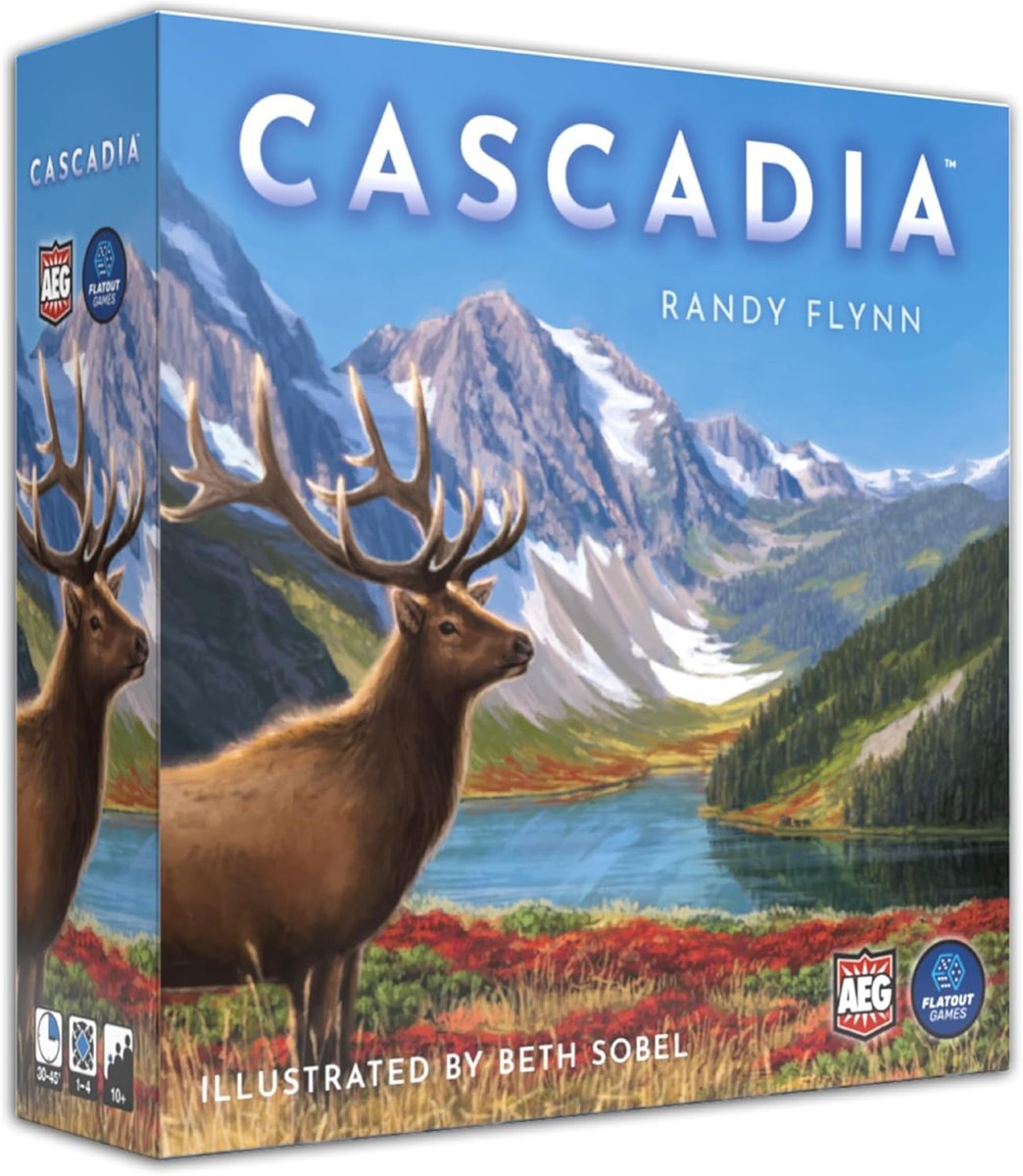 Light weight
Cascadia
Light weight
Cascadia
$37.4
A calm, puzzly tile layer about wildlife and watersheds that plays as well solo as it does with family.
Buy Cascadia · $37.4 →Pick Carcassonne if
You want the classic tile-layer with a shared map, gentle interaction, and the ability to block or share features with other players; it plays up to five and teaches in five minutes.
Pick Cascadia if
You want the modern solitaire-ish puzzle: everyone builds their own landscape, nobody blocks anyone, and the wildlife scoring cards change every game.
The tradeoff.
Carcassonne
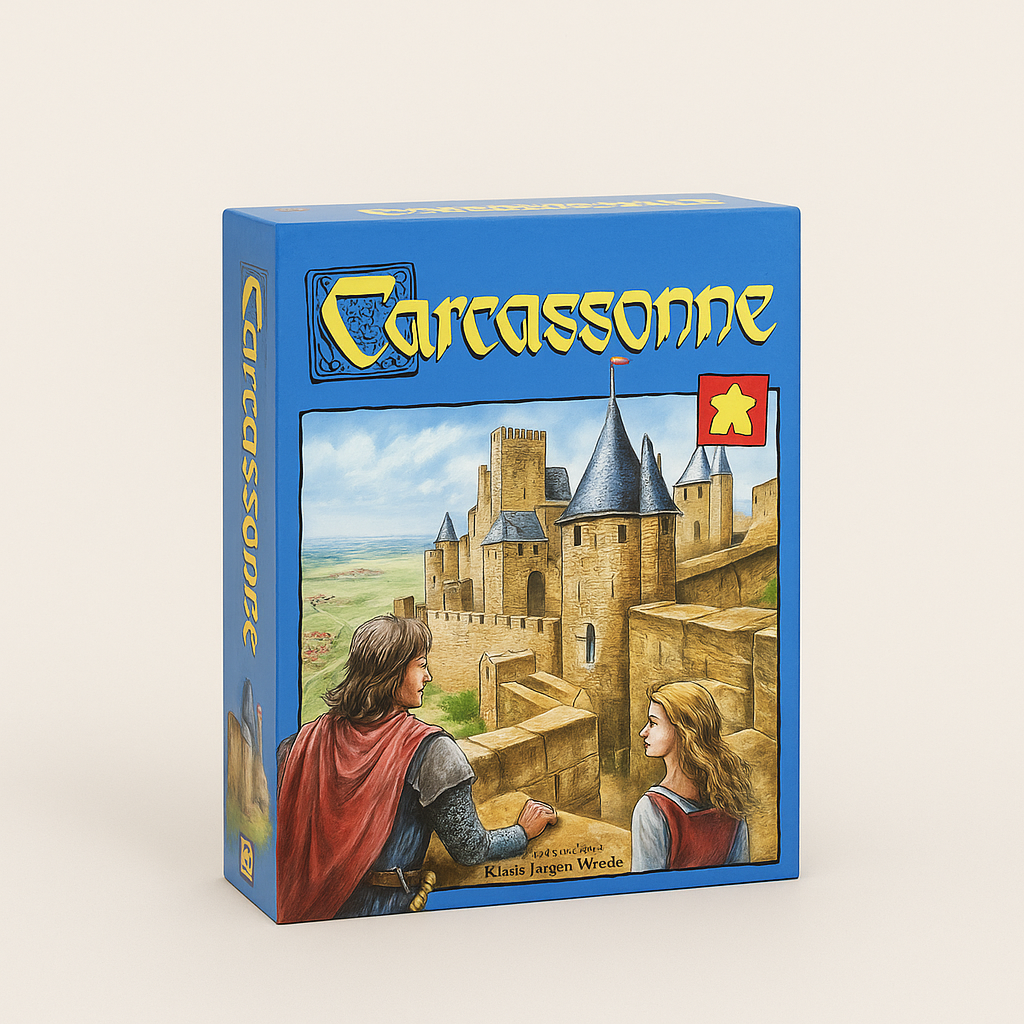
Carcassonne is a tile-placement game where players take turns drawing and positioning square tiles to collaboratively build a medieval landscape of cities, roads, monasteries, and fields. On each turn, you draw a tile, place it adjacent to existing ones, then optionally deploy a wooden follower onto that tile to claim a feature. Once a city is completed or a road finished, you score points and reclaim your follower. The elegance lies in its simplicity: every turn follows the same pattern, yet tactical decisions about placement and follower deployment create genuine tension between short-term point grabs and long-term positioning.
What distinguishes Carcassonne is how it generates interaction through passive competition rather than direct conflict. You're constantly evaluating whether to extend an opponent's nearly-finished city for points or block their expansion, forcing difficult risk-reward calculations. The landscape itself becomes a shared canvas that tells a story of medieval development, making the experience feel collaborative even though you're competing. Unlike heavier spatial games that demand exhausting calculation, it maintains a relaxed pace while rewarding clever tile interpretation and placement foresight. It simply plays well across its entire player range without feeling diluted.
Best for: Board Games for Beginners
Cascadia
Cascadia is a tile laying and token drafting game about assembling Pacific Northwest ecosystems. The central market offers four pairs, each a hexagonal habitat tile matched with a wildlife token. On your turn you take one pair, add the tile to your growing personal map, and place the animal token on a legal tile. Habitats score for your largest connected corridor of each terrain type, while each of the five animals scores by a pattern card drawn at setup, a different combination every game, so the same species wants something new from night to night. Nature tokens, earned on certain tiles, let you break the market pairing and take the tile and animal you actually want. Turns take seconds: take, place, place, done.
Cascadia won the 2022 Spiel des Jahres, and it is easy to see why the jury landed here. It is the gentlest on ramp to spatial puzzle games in years, teaching in ten minutes and playing in thirty to forty five, yet the swappable scoring cards keep it interesting for experienced players far longer than a box this friendly has any right to be. It is also one of the best solo packages in its weight class, with a scenario based solo mode that gives a lone player a long ladder of distinct challenges rather than a single beat your score exercise. The calm is the point: nobody attacks anyone, downtime is near zero, and the finished map looks like a nature documentary still.
Best for: Solo, Cabin Trip, Family with Kids
These are editorial picks; publishers cannot pay to appear here. Amazon links fund the site, and if you'd rather buy local, find a store via BoardGameGeek.