Head-to-head comparison
Cryptid vs Codenames
Cryptid is an elegant deduction game for 3-5; Codenames is a louder party game that scales to large groups.
 medium weight
Cryptid
medium weight
Cryptid
$35
Deductively search for the mysterious creature with your unique clues.
Buy Cryptid · $35 →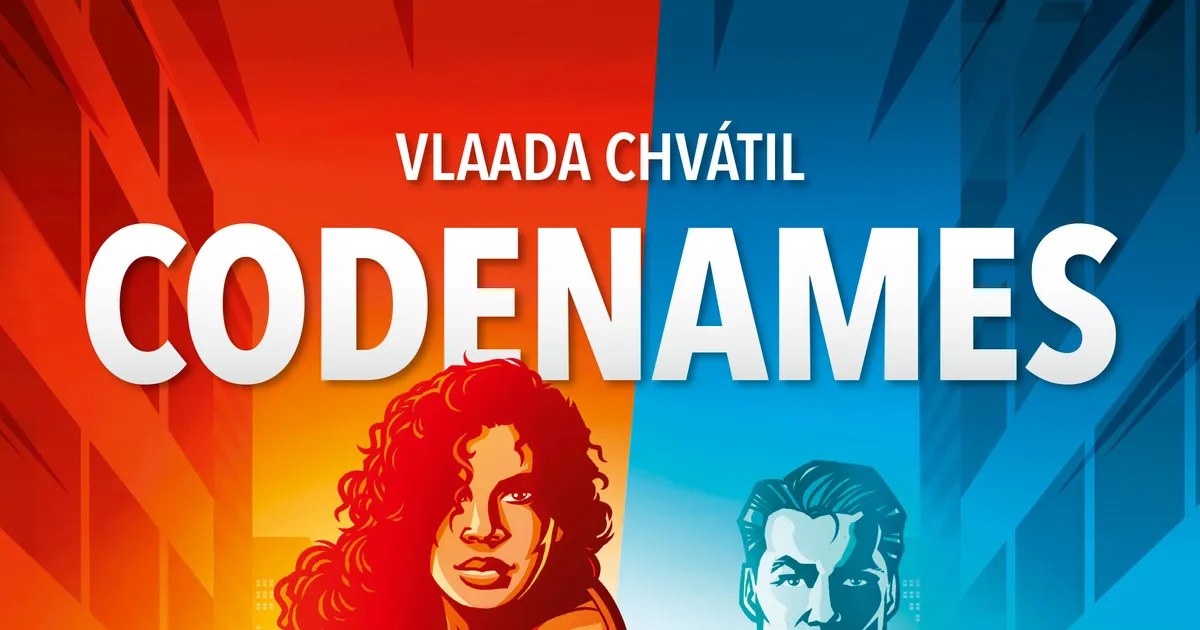 Light weight
Codenames
Light weight
Codenames
$20
Word-association party game. Plays with grandparents, college kids, anyone in between.
Buy Codenames · $20 →Pick Cryptid if
You want a deduction puzzle where each player has secret information and the goal is to narrow down a single hidden location.
Pick Codenames if
You want team-based word association that plays in 20 minutes with 6-12 people.
The tradeoff.
Cryptid
Cryptid is a deduction game where players work cooperatively to pinpoint the location of a hidden creature on a shared map. Each player receives a unique clue describing where the cryptid is not, perhaps it avoids certain terrain types or keeps its distance from specific landmarks. On your turn, you'll place elimination markers on the map to reveal information, then other players use logical deduction to determine what your clue means. The core loop involves players gradually narrowing the possible locations through careful questioning and spatial reasoning, until someone has enough information to confidently identify the creature's hex on the map.
What sets Cryptid apart is its elegant simplicity masking genuine intellectual satisfaction. The clues force you to think spatially and reason backward from negative space, creating moments of genuine delight when the board state suddenly clicks into place. There's no luck, no dice, and no player elimination, just pure collaborative puzzle-solving that rewards careful listening and lateral thinking. Unlike heavier deduction games that can feel tedious, Cryptid maintains momentum while delivering the mental engagement that makes you want to immediately play again with fresh clues.
Best for: For Introverts
Codenames
Codenames is a word-association game where two teams compete to identify their agents by interpreting one-word clues. One player per team acts as the spymaster, seeing a grid of twenty-five words and a hidden key card showing which words belong to their team. Spymasters take turns giving a single clue word plus a number, indicating how many of their team's words relate to that clue. Their teammates then point to words they think match, trying to identify all their agents before hitting an opponent's operative or the assassin, which ends the round immediately. The turn loop is simple, rapid-fire, and endlessly variable because the clue-giving drives everything.
What makes Codenames distinctive is how elegantly it transforms into a showcase for lateral thinking and shared references. The spymasters become improvisational comedians and lateral thinkers, searching for connections others might miss, while their teams become pattern-recognition detectives, debating interpretations in real time. There's genuine tension when a clue points to multiple possibilities and your teammate hesitates over which word to choose. The table fills with conversation, laughter, and occasional groans of "oh, I see it now." Unlike many light party games that feel more like charades variants, Codenames creates genuine moments of intellectual connection and creative problem-solving.
Best for: 5+ Players, Family with Kids, Holiday Gathering
These are editorial picks; publishers cannot pay to appear here. Amazon links fund the site, and if you'd rather buy local, find a store via BoardGameGeek.