Head-to-head comparison
Viticulture Essential Edition vs Scythe
Same publisher, different scale. Viticulture is the medium-weight wine game you can teach a family; Scythe is the heavy showpiece. Buy Viticulture first unless your group already plays heavy games.
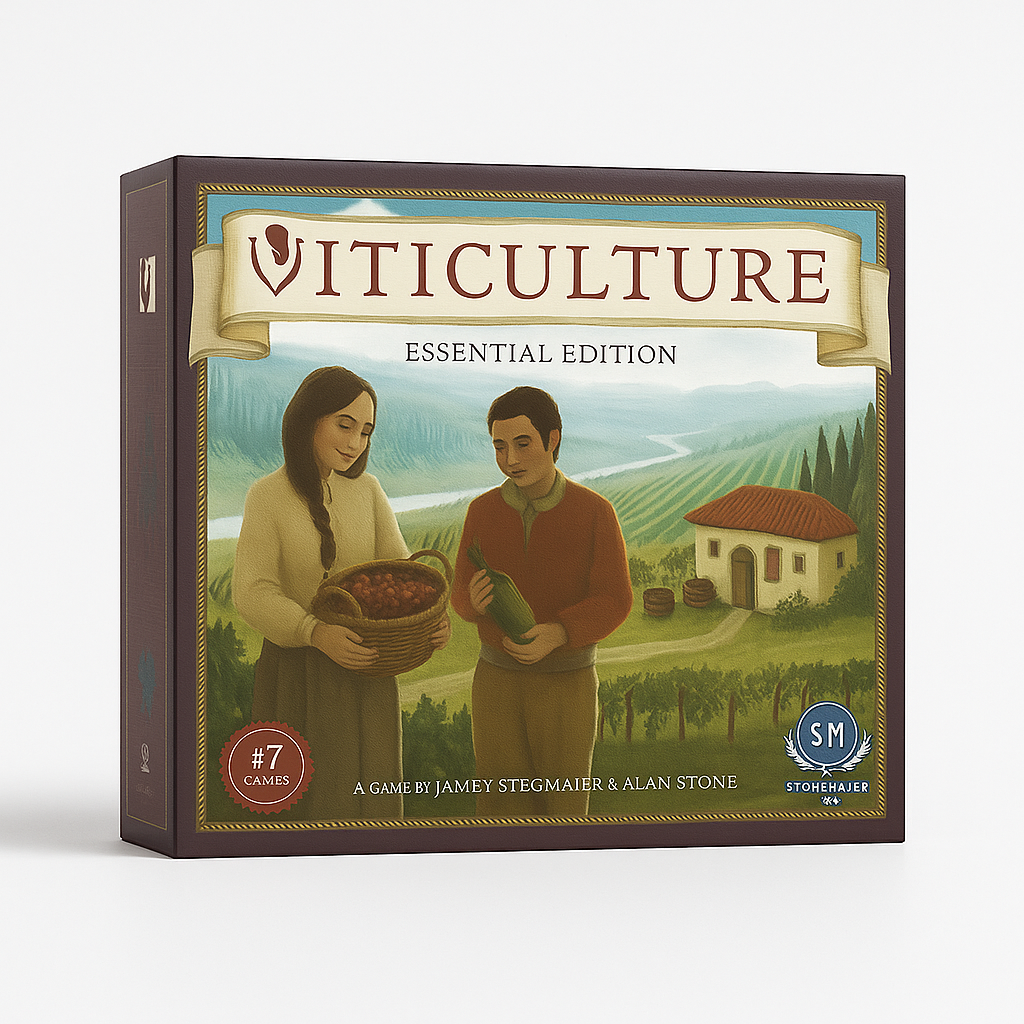 medium weight
Viticulture Essential Edition
medium weight
Viticulture Essential Edition
$52
Run your own vineyard by planting vines and harvesting grapes.
Buy Viticulture Essential Edition · $52 →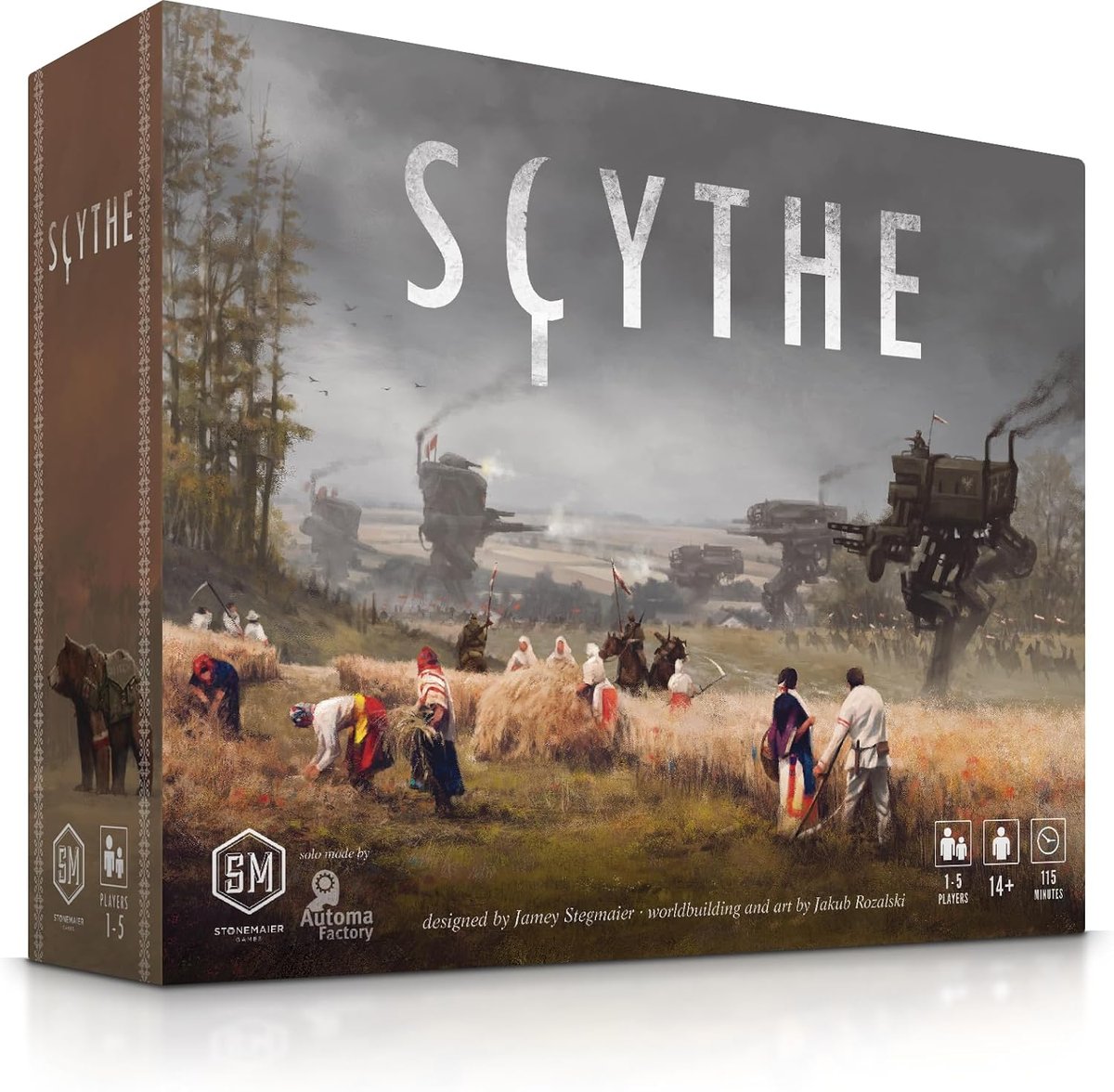 Heavy weight
Scythe
Heavy weight
Scythe
$90
Mechs, farms, and quiet menace across an alternate 1920s Europe. An engine builder wearing a war game's armor.
Buy Scythe · $90 →Pick Viticulture Essential Edition if
You want worker placement with a warm theme and a gentler learning curve; Viticulture plays in 45 to 90 minutes and up to six, and it is the better introduction to Stonemaier games.
Pick Scythe if
You want the bigger, longer, more strategic experience with a map, miniatures, and a stronger solo mode.
The tradeoff.
Viticulture Essential Edition
Viticulture Essential Edition puts you in charge of a budding vineyard across a series of seasons. Each turn, you'll take two actions from a small but meaningful menu: plant grape vines, build structures, harvest grapes, make wine, or fulfill orders for payment. The beauty lies in its elegant simplicity, there's no overwhelming decision tree, yet the order in which you execute these actions matters tremendously. You're gradually building toward completing wine orders worth victory points, and the first player to twenty points wins. The core loop feels natural and thematic without bogging down in unnecessary simulation.
What separates Viticulture from other medium-weight euros is its remarkable balance between accessibility and genuine strategic tension. Playing feels like running an actual business rather than shuffling tokens around a board. The asymmetrical player powers, drawn randomly at game start, create different viable paths to victory and ensure repeated plays feel fresh. There's real competition without nastiness, and while luck exists through card draws, skilled players consistently outperform lucky ones. The vineyard theme isn't pasted on; every mechanic reinforces the fantasy of building something.
Scythe
Scythe is an engine building and area control game set in an alternate 1920s Europe of mechs and farmland. Each player gets an asymmetric faction and a separate player mat, and the combination defines your whole game. On your turn you move your action token to one of four sections of your mat and take its top action, such as moving units, producing resources, trading, or bolstering power, then optionally pay for the bottom action printed beneath it, like deploying a mech, building a structure, enlisting a recruit, or upgrading. You cannot pick the same section two turns in a row, so the game becomes a rhythm exercise: sequencing top actions so your bottom row engine fires as often as possible while upgrades steadily drop its costs. Stars mark achievements, the sixth star placed by anyone ends the game on the spot, and final scoring counts stars, territory, and resources, scaled by your popularity standing.
Understand what Scythe is before buying: the mechs and the brooding military art promise a war game, and it is not one. Combat exists, it is expensive, and most sessions contain only a handful of fights. This is a logistics and timing game wearing armor, closer in spirit to an efficiency focused euro than to a battle map brawl, and players who buy it for constant conflict routinely bounce off. Players who want to quietly assemble a terrifying economy, then end the game before the table realizes it is ending, adore it, which is why it has held a place near the top of the BoardGameGeek rankings for a decade.
Best for: Epic Evening, Solo, Strategy Night
These are editorial picks; publishers cannot pay to appear here. Amazon links fund the site, and if you'd rather buy local, find a store via BoardGameGeek.