Head-to-head comparison
7 Wonders vs Catan
Catan is the social game with more luck and more talking; 7 Wonders is the efficient game with more players and less interaction. For a mixed family table Catan still wins; for a group that plays often, 7 Wonders holds up longer.
 Medium weight
7 Wonders
Medium weight
7 Wonders
$51.1
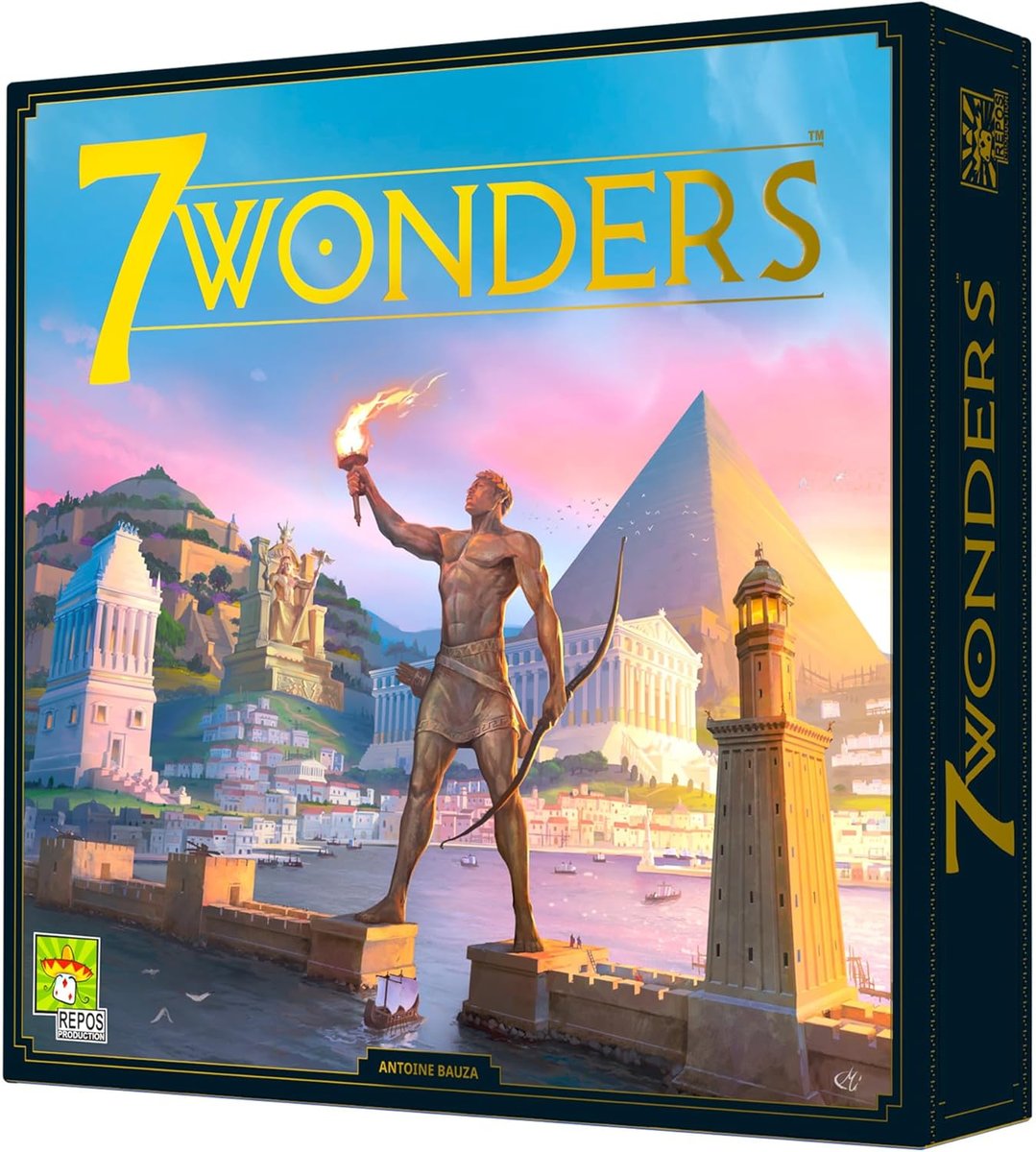
Seven players, three ages, thirty minutes: the card drafter that made big group strategy actually work.
Buy 7 Wonders · $51.1 →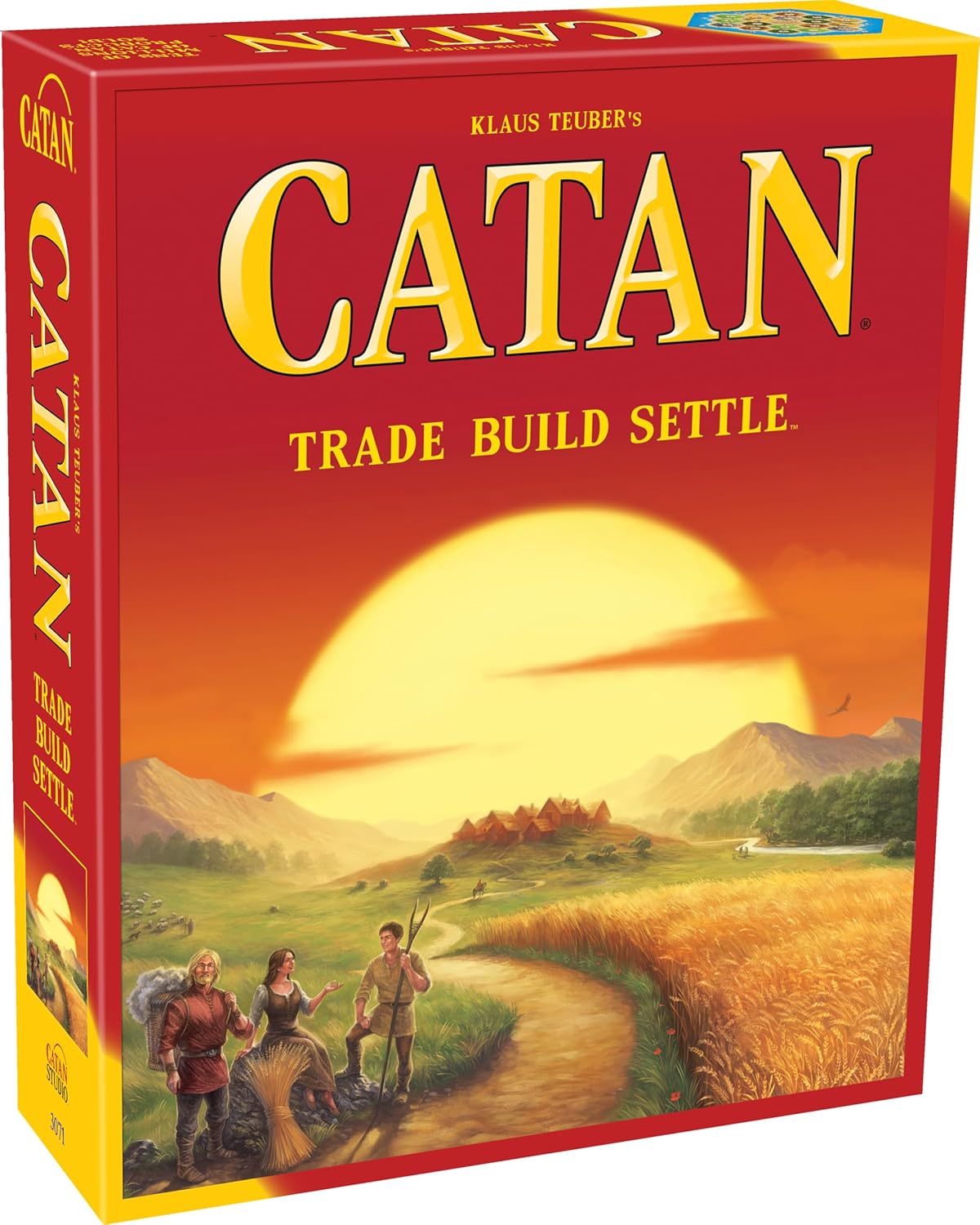 Medium weight
Catan
Medium weight
Catan
$39.99
The trade-and-build classic. Five expansions deep if anyone catches the bug.
Buy Catan · $39.99 →Pick 7 Wonders if
You want something that plays in half an hour at almost any player count with no downtime, and you would rather draft cards than trade and roll dice.
Pick Catan if
You want the classic table experience: trading with people, a modular board, dice rolls that make the whole table groan, and 60 to 90 minutes of negotiation.
The tradeoff.
7 Wonders
7 Wonders is a simultaneous drafting game where each player develops one of the great cities of the ancient world across three ages. Every age, you receive a hand of cards, keep one, and pass the rest along; everyone reveals at once, so a full table of seven resolves its turns in roughly the time a three player game would. You play six cards per age: resource production, commercial buildings, science, military, civic monuments, and eventually guilds, paying costs from your own production or buying resources from the players seated beside you. At the end of each age you compare military strength with both neighbors, and at game end you total points across seven categories, including your namesake wonder if you built its stages.
The simultaneous structure is the whole trick, and it still holds up sixteen years on: this is the rare strategy game where seven players genuinely finishes in about thirty minutes. Interaction is local, limited to your left and right neighbors, which keeps big games manageable but means the far side of the table might as well be on another continent. That is fine for casual groups and mildly frustrating for players who want to police the leader. The 2020 New Edition cleaned up the card layout, streamlined the rules, and added colorblind friendly design, and it is the version to buy.
Best for: 5+ Players, College Dorm, 30 Minutes or Less
Catan
Catan puts you on a newly settled island where you're building settlements, cities, and roads to accumulate victory points. On your turn, you roll dice to determine which hexagonal terrain tiles produce resources, wheat, sheep, brick, ore, and lumber. You then trade with other players or the bank to get the specific resources you need, then spend them to build. The core tension is elegant: you want to settle on productive hexes, but so do your opponents, and the dice determine everything. A single roll can make your carefully positioned settlements flourish or leave you resource-starved for a round.
What makes Catan special is how it creates genuine negotiation at the table. Unlike games where trading is mechanical, here you're cutting real deals: "I'll give you two sheep for that ore," with all the posturing and camaraderie that entails. The game generates memorable moments and table banter because your success depends partly on convincing others to trade with you rather than against you. The randomness keeps it from feeling like a puzzle with a solution, and the moderate length means even when someone pulls ahead, the game stays tense and winnable for everyone.
Best for: 3-4 Players, Family with Kids, Cabin Trip
These are editorial picks; publishers cannot pay to appear here. Amazon links fund the site, and if you'd rather buy local, find a store via BoardGameGeek.