Head-to-head comparison
Concordia vs Brass: Birmingham
Two of the most respected euros ever made. Concordia is calmer and easier to teach; Brass is meaner and deeper. Groups that dislike being squeezed, Concordia. Groups that love it, Brass.
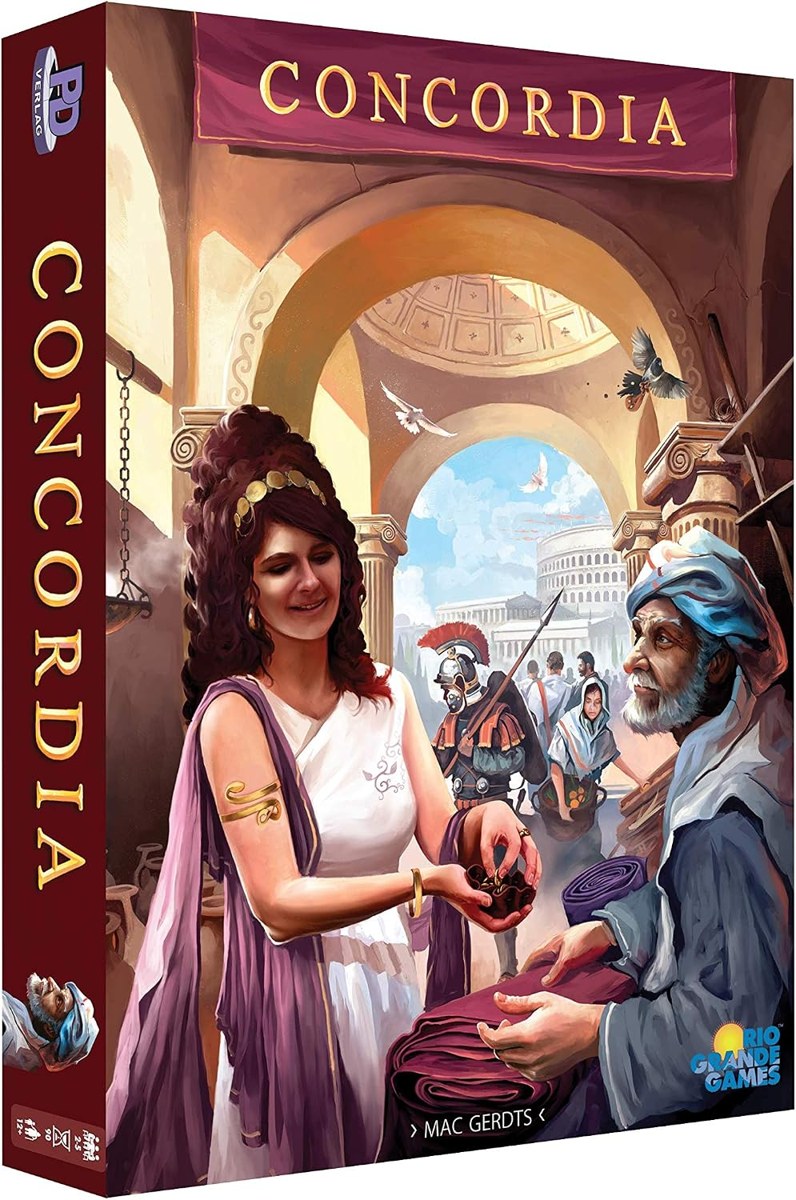 Medium weight
Concordia
Medium weight
Concordia
$46.43
Roman trade and settlement with a hand of action cards that become your score. Elegant, deep, no luck.
Buy Concordia · $46.43 → heavy weight
Brass: Birmingham
heavy weight
Brass: Birmingham
$73.78
Build industries and trading networks in an intense economic strategy.
Buy Brass: Birmingham · $73.78 →Pick Concordia if
You want an elegant, almost peaceful economic game with a rulebook that fits on a card and no luck at all.
Pick Brass: Birmingham if
You want the tighter, tenser one: a shared network, beer that rivals can drink, and a two-era arc with a canal-to-rail transition.
The tradeoff.
Concordia
Concordia is a game about spreading trade colonies across the Roman world, driven by one of the most elegant mechanisms in the hobby: your hand of action cards is also your scoring. Each turn you play one card, move colonists and build in cities, buy goods, produce in a province, or take a Senator to buy new cards. Every card names a god, and at the end of the game each god scores you points based on what you built: cities per province, colonists on the board, goods you can supply. So buying a card is both an action and a bet on how your empire will look at the end.
There are no dice, no randomness beyond the order the cards come out, and no direct attacks. The interaction is subtle and constant: cities cost more as they fill up, so being second into a region hurts, and the Prefect action that produces goods in a province produces for everyone with a house there, so your rivals piggyback on your economy. Reading the map and timing your expansions around other players is where the depth lives.
Best for: Strategy Night, Epic Evening, 3-4 Players
Brass: Birmingham
Brass: Birmingham is a network-building economic strategy game where players develop industrial enterprises across 19th-century England. On your turn, you either play a card to build an industry, develop infrastructure, or sell goods for profit. Cards in your hand represent locations and resources, and playing them establishes factories, mines, and trading links. The clever twist: after playing a card, you discard your hand and draw new ones, forcing constant adaptation. The game spans two eras with different rules, and your network's value shifts dramatically between them. You're essentially constructing a supply chain while managing limited hand options and constantly shifting market conditions.
What separates Brass from other economic heavy-hitters is its elegant tension between long-term planning and forced improvisation. Every decision carries weight, building a steel mill creates future opportunities but locks you out of immediate pivots. The table experience feels genuinely tense; players watch each other develop competing networks with real stakes. The two-era structure means your carefully built empire undergoes seismic shifts halfway through, preventing anyone from running away with a dominant position. It's a game where clever timing and network positioning matter more than raw luck, rewarding players who can read opponents and anticipate disruptions.
These are editorial picks; publishers cannot pay to appear here. Amazon links fund the site, and if you'd rather buy local, find a store via BoardGameGeek.