Head-to-head comparison
Root vs Brass: Birmingham
Both are heavy games for experienced players. Root's asymmetry is extreme; Brass Birmingham is more symmetric but equally deep.
 Heavy weight
Root
Heavy weight
Root
$60
Asymmetric forest war game. Each faction plays completely differently. Deep.
Buy Root · $60 → heavy weight
Brass: Birmingham
heavy weight
Brass: Birmingham
$70
Build industries and trading networks in an intense economic strategy.
Buy Brass: Birmingham · $70 →Pick Root if
You want high asymmetry, each faction plays by completely different rules, over a 75-90 minute session.
Pick Brass: Birmingham if
You want a tight economic network game where everyone plays by the same rules but optimizes differently.
The tradeoff.
Root
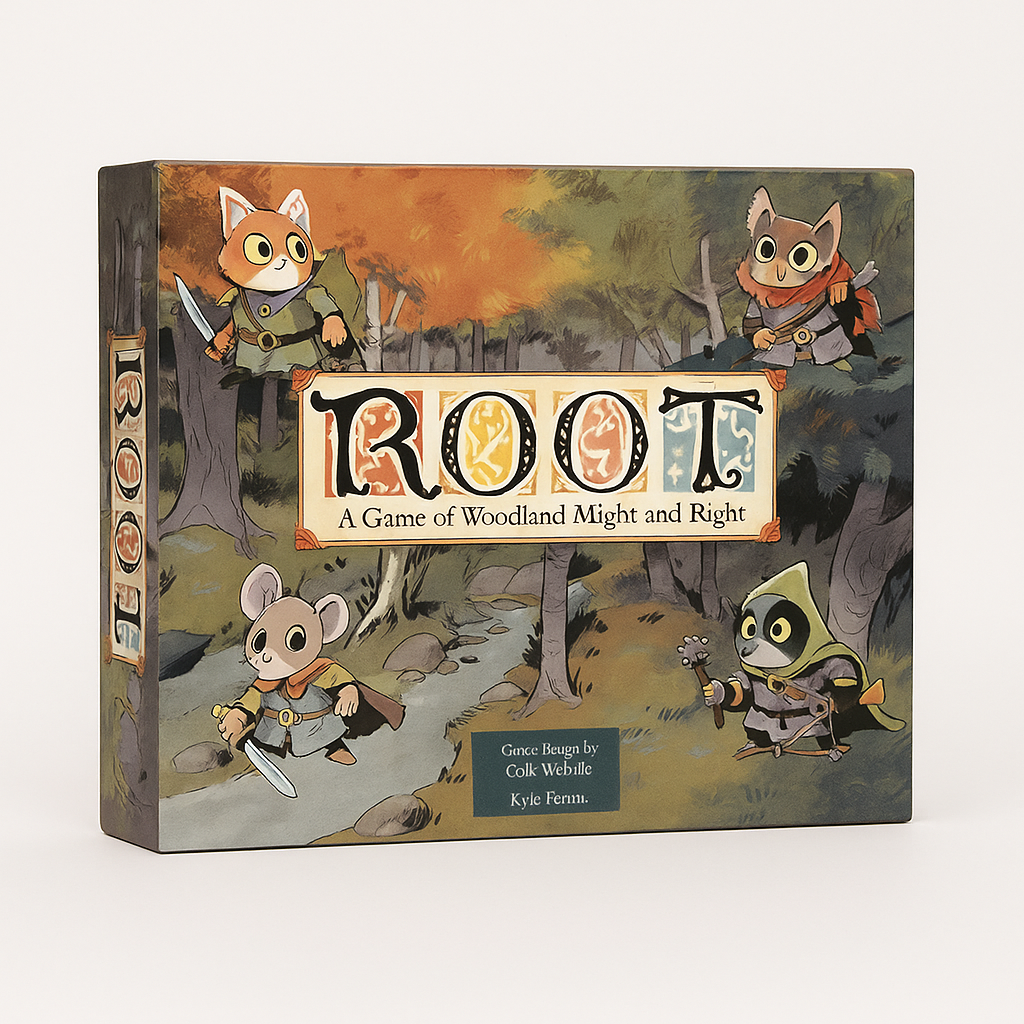
Root presents a woodland conflict where each faction operates under completely different rules and victory conditions. The Marquise de Cat builds wooden structures and controls territory through straightforward military might. Meanwhile, the Woodland Alliance spreads sympathy tokens and converts supporters through grassroots revolt. The Vagabond plays solo, completing quests for allies and items. The Riverfolk Company (fourth faction) controls trade and economy. Rather than a unified turn structure, each player's turn feels like a different game entirely, with their own action sequences, resource systems, and strategic rhythms that barely interact until combat erupts.
What separates Root from other heavy asymmetric games is how genuinely different the player experience becomes. Playing as the Cat feels like traditional territory control, but as the Alliance you're organizing political movements. This isn't cosmetic flavor applied to identical mechanics, it's structural divergence that creates fascinating emergent situations where no two playthroughs resemble each other. The table develops its own narrative tension because players are literally speaking different strategic languages. Fans of games like Spirit Island or Cosmic Encounter who crave asymmetry find themselves completely absorbed by Root's faction depth and the puzzle of learning multiple rule sets simultaneously.
Best for: 3-4 Players, Strategy Night, Epic Evening
Brass: Birmingham
Brass: Birmingham is a network-building economic strategy game where players develop industrial enterprises across 19th-century England. On your turn, you either play a card to build an industry, develop infrastructure, or sell goods for profit. Cards in your hand represent locations and resources, and playing them establishes factories, mines, and trading links. The clever twist: after playing a card, you discard your hand and draw new ones, forcing constant adaptation. The game spans two eras with different rules, and your network's value shifts dramatically between them. You're essentially constructing a supply chain while managing limited hand options and constantly shifting market conditions.
What separates Brass from other economic heavy-hitters is its elegant tension between long-term planning and forced improvisation. Every decision carries weight, building a steel mill creates future opportunities but locks you out of immediate pivots. The table experience feels genuinely tense; players watch each other develop competing networks with real stakes. The two-era structure means your carefully built empire undergoes seismic shifts halfway through, preventing anyone from running away with a dominant position. It's a game where clever timing and network positioning matter more than raw luck, rewarding players who can read opponents and anticipate disruptions.
These are editorial picks; publishers cannot pay to appear here. Amazon links fund the site, and if you'd rather buy local, find a store via BoardGameGeek.