Head-to-head comparison
The Blood of an Englishman vs Jaipur
Both are two-player card games that play in twenty to thirty minutes for under thirty dollars. Jaipur is the proven one and the easier teach; The Blood of an Englishman is the stranger, more puzzly duel.
 light weight
The Blood of an Englishman
$20, checked Nov 3.
Match wits as Jack or Giant in this strategic two-player puzzle.
Buy The Blood of an Englishman · $20 →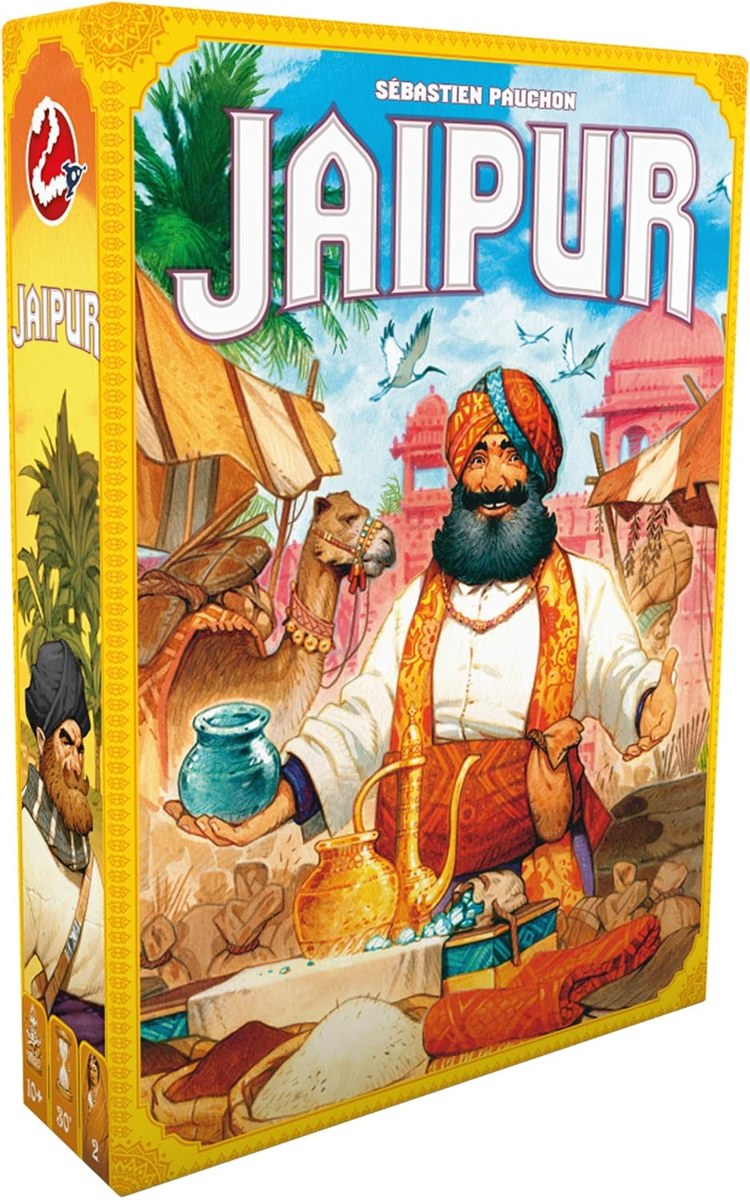 Light weight
Jaipur
$26.58, checked Nov 3.
The best two-player trading game. Sell goods, grab camels, and time your sets. Thirty minutes, endless replay.
Buy Jaipur · $26.58 →Pick The Blood of an Englishman if
You want asymmetry: one of you is Jack and one is the Giant, with different goals and different moves on the same cards.
Pick Jaipur if
You want symmetry: two merchants, the same market, and a game decided by timing your sales.
Side by side.
| Fact | The Blood of an Englishman | Jaipur |
|---|---|---|
| Players | 2 | 2 |
| Playing time | 20 min | 30 min |
| Weight | Light | Light |
| Price today | $20 | $26.58 |
- Both are two-player games, nothing more and nothing less.
- Cheaper today: The Blood of an Englishman by $6.58, prices checked Nov 3.
The tradeoff.
The Blood of an Englishman
The Blood of an Englishman casts you as either Jack or the Giant in a two-player puzzle duel based on the nursery rhyme. The core loop is straightforward: players alternate playing cards or tiles to build a path up the beanstalk, with each player trying to reach their objective while blocking their opponent's advance. It's a push-your-luck game wrapped in light spatial reasoning, where every move opens opportunities for your opponent while creating threats they must address. Turns move quickly, and the decisions have real weight despite the simple rule set.
What sets this apart from other light two-player games is its asymmetrical design and the genuine tension it creates in just twenty minutes. The Giant and Jack have completely different win conditions and abilities, so they're not simply playing the same game from opposite ends. This asymmetry means repeated plays don't feel repetitive, since you're essentially learning two different puzzles. The theme isn't just window dressing either, it actually informs the mechanics in ways that make thematic sense, giving the game a memorable personality that many abstracts at this price point simply lack.
Jaipur
Jaipur is a two-player card game about trading goods in a market, and it has been the standard recommendation for couples for over a decade. A row of five cards sits between you. On your turn you either take cards into your hand, one goods card, or all the camels, or swap several of your cards for several market cards, or you sell a set of goods for tokens. The tokens for each good decline in value as they are taken, so selling early is worth more, but selling in bigger sets earns bonus tokens, so waiting pays too. Best of three rounds wins.
The camels are the clever part. They do not count toward your hand limit and they are the currency for swapping multiple cards, but taking them all also refreshes the market with new cards your opponent gets first pick of. Every action has a cost in tempo, and the game is entirely about reading which goods your opponent is collecting and getting to the valuable tokens first. There is no direct attack and almost no downtime.
Best for: Two Players, Date Night, Long Flight
These are editorial picks; publishers cannot pay to appear here. Amazon links fund the site, and if you'd rather buy local, find a store via BoardGameGeek.