Head-to-head comparison
Viticulture Essential Edition vs Everdell
Both are medium-weight worker-placement games that also play solo. Viticulture is the cleaner teach; Everdell is the prettier box with more card combos. Either is a good first euro.
 medium weight
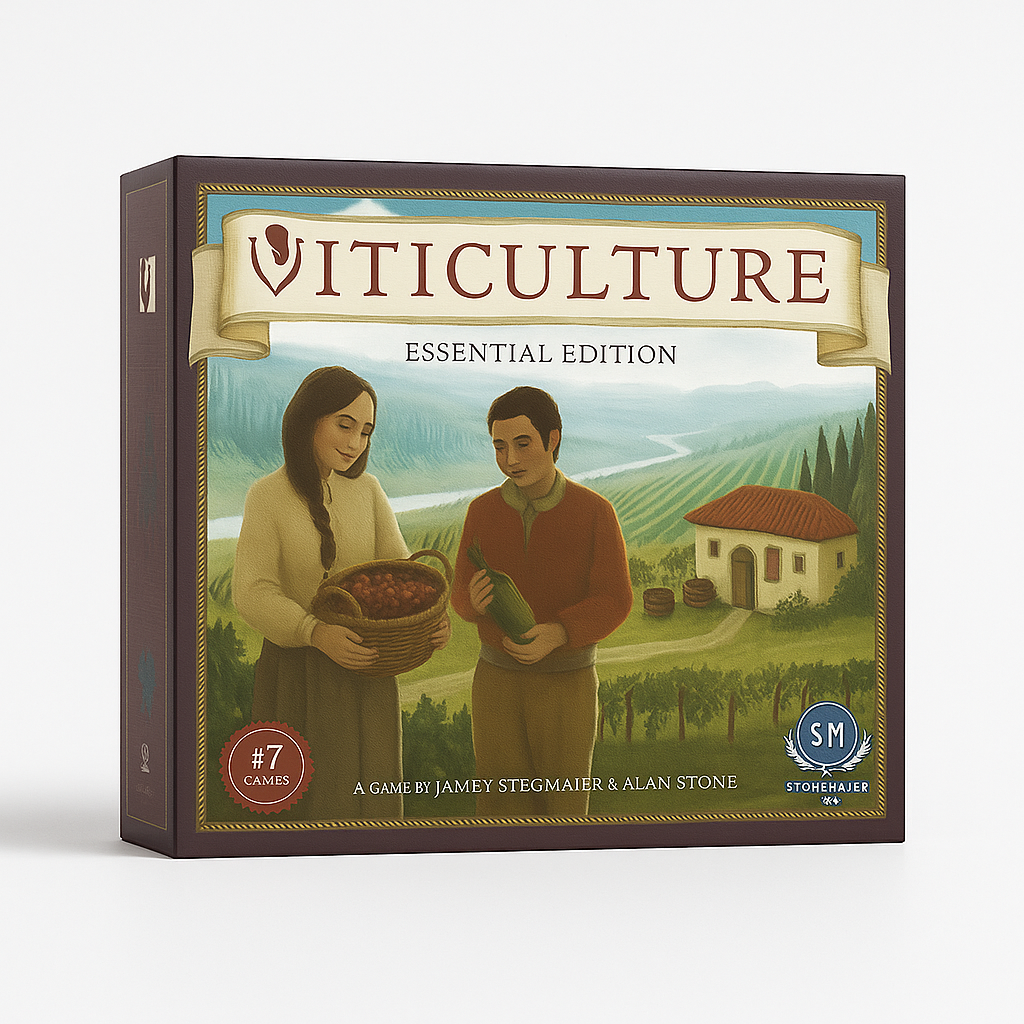
Viticulture Essential Edition
$52, checked Nov 3.
Run your own vineyard by planting vines and harvesting grapes.
Buy Viticulture Essential Edition · $52 →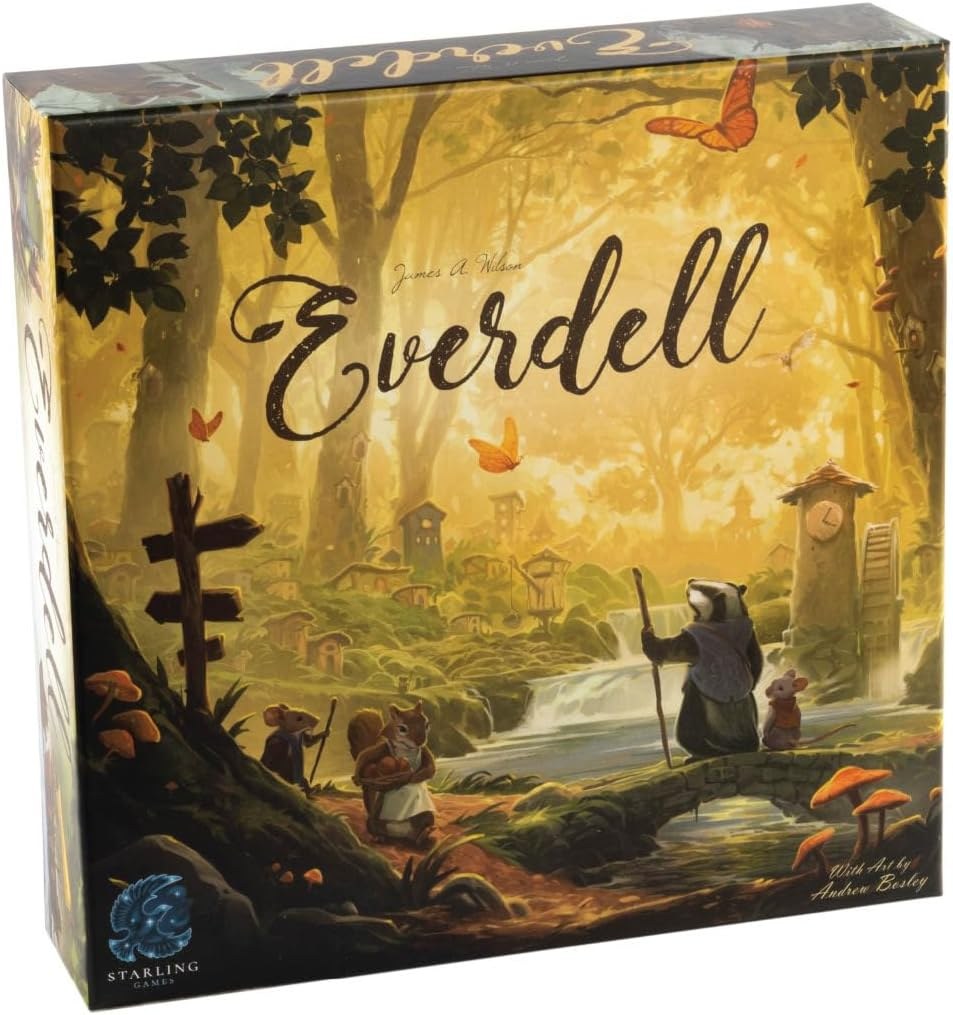 Medium weight
Everdell
$75, checked Nov 3.
Woodland creatures, a cardboard tree, and one of the most charming engine builders of the last decade.
Buy Everdell · $75 →Pick Viticulture Essential Edition if
You want worker placement with a calendar: plant in spring, harvest in autumn, and a wine order to fill before the game ends.
Pick Everdell if
You want worker placement with a tableau: every card you play does something for the cards after it, and the board is a tree.
Side by side.
| Fact | Viticulture Essential Edition | Everdell |
|---|---|---|
| Players | 1-6 | 1-4 |
| Playing time | 45-90 min | 40-80 min |
| Weight | Medium | Medium |
| Price today | $52 | $75 |
- Both play at two.
- Both have a solo mode.
- Biggest table: Viticulture Essential Edition seats six, Everdell stops at four.
- Cheaper today: Viticulture Essential Edition by $23, prices checked Nov 3.
The tradeoff.
Viticulture Essential Edition
Viticulture Essential Edition puts you in charge of a budding vineyard across a series of seasons. Each turn, you'll take two actions from a small but meaningful menu: plant grape vines, build structures, harvest grapes, make wine, or fulfill orders for payment. The beauty lies in its elegant simplicity, there's no overwhelming decision tree, yet the order in which you execute these actions matters tremendously. You're gradually building toward completing wine orders worth victory points, and the first player to twenty points wins. The core loop feels natural and thematic without bogging down in unnecessary simulation.
What separates Viticulture from other medium-weight euros is its remarkable balance between accessibility and genuine strategic tension. Playing feels like running an actual business rather than shuffling tokens around a board. The asymmetrical player powers, drawn randomly at game start, create different viable paths to victory and ensure repeated plays feel fresh. There's real competition without nastiness, and while luck exists through card draws, skilled players consistently outperform lucky ones. The vineyard theme isn't pasted on; every mechanic reinforces the fantasy of building something.
Everdell
Everdell is a worker placement and tableau building game set in a valley of forest critters getting ready for winter. Each player sends small wooden workers to gather resources (twigs, resin, pebbles, berries) from spots on the board and spends those resources to play cards into a personal city of fifteen slots. Cards are critters and constructions, and many constructions let you play a matching critter for free, which is where the engine comes from: a good city chains discounts and triggered bonuses so that late-game turns feel generous. The game runs across four seasons; when you run out of moves you pass into the next season, recall your workers, and usually gain a new one, so the player who plans their spring well has more to do in autumn.
The production is the first thing anyone notices. The Ever Tree stands up from the board, the berries are squishy, and the art is warm without being childish. That matters at the table because it pulls in people who would never sit down for a dry euro. Underneath, the decisions are real: the meadow of shared cards changes constantly, and knowing when to grab a card you cannot afford yet, hold it in hand, and build toward it is the skill that separates good players.
Best for: Strategy Night, Two Players, Solo
These are editorial picks; publishers cannot pay to appear here. Amazon links fund the site, and if you'd rather buy local, find a store via BoardGameGeek.