Head-to-head comparison
The Gang vs Hanabi
Hanabi is the classic and plays from two; The Gang starts at three and borrows poker hands so there is less to teach. Both are twenty minutes and cheap.
$14.99, checked Nov 3.
Cooperative Texas hold'em with no talking: everyone guesses where their hand ranks, and the whole table wins or loses together.
Buy The Gang · $14.99 → Light weight
Hanabi
$12.99, checked Nov 3.
You see everyone's cards but yours. Pure cooperative reasoning. Tiny box.
Buy Hanabi · $12.99 →Pick The Gang if
You want the newer one with poker underneath it and a table of three to six guessing where their hands rank.
Pick Hanabi if
You want the original quiet cooperative: you hold your cards facing away from yourself and your friends give you clues about them.
Side by side.
| Fact | The Gang | Hanabi |
|---|---|---|
| Players | 3-6 | 2-5 |
| Playing time | 20 min | 25 min |
| Weight | Light | Light |
| Price today | $14.99 | $12.99 |
- At two players: Hanabi. The Gang needs three.
- Biggest table: The Gang seats six, Hanabi stops at five.
- Cheaper today: Hanabi by $2, prices checked Nov 3.
The tradeoff.
The Gang
The Gang is poker with the money and the bluffing taken out and one strange rule put in their place. Everyone gets two cards, the flop, turn and river come out as usual, and after each street each player quietly takes a numbered chip: a one if you think your hand is the worst at the table, a six if you think it is the best. You cannot say a word about your cards. When the river is dealt and the chips are all claimed, the hands are revealed, and the table wins the round only if the chips are in the right order.
That sounds simple, and the first hand usually goes wrong in a way that gets the whole table laughing. The game is in the chip stealing: if someone takes the five and you think your hand is better, you take the five from them, and that silent tug of war is the only communication allowed. Win three hands before you lose three and the gang gets away with the heist. Later rounds add special cards that tighten the rules.
Best for: Cooperative, 5+ Players, 30 Minutes or Less
Hanabi
Hanabi inverts the standard card game experience: you hold your cards facing away from you, seeing everyone else's hand but not your own. Players cooperatively build sequences of colored fireworks by playing cards in ascending order from one to five. On your turn you either play a card you've deduced from clues others have given you, discard a card to gain a clue token, or spend a token to tell another player about their cards. You can only provide information about suits or numbers, never say "play this card now." The group wins by completing all five color sequences before running out of clues or lives through incorrect plays.
What makes Hanabi remarkable is how this simple rule generates genuine tension and beautiful moments of silent reasoning. The table falls into a distinct rhythm: long pauses where players stare at each other's cards looking for patterns, sudden realizations when a clue clicks into place, and crushing disappointment when someone plays the wrong card despite everyone's best logic. Unlike many light cooperatives that devolve into one player directing others, Hanabi forces everyone into equal partnership. The information economy creates real puzzles, and there's genuine satisfaction in pulling off a perfectly orchestrated sequence of plays with minimal communication.
Best for: Two Players, 3-4 Players, Cooperative
These are editorial picks; publishers cannot pay to appear here. Amazon links fund the site, and if you'd rather buy local, find a store via BoardGameGeek.
Also worth considering.
Games that share contexts with both The Gang and Hanabi.
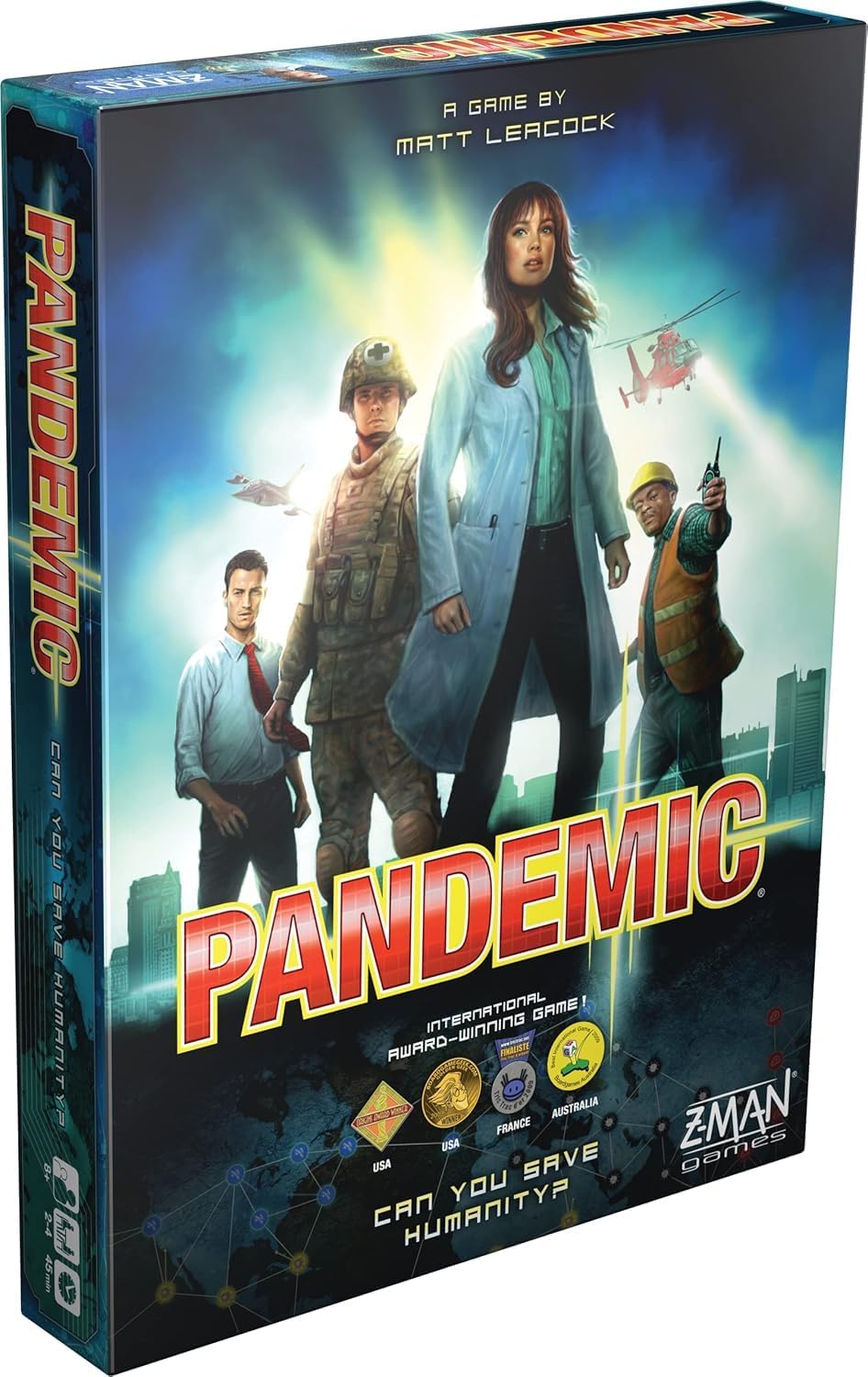
Cooperative classic. Save the world together. The game that converts non-gamers.…

Reverse-colonialism cooperative. The thinky version of Pandemic. Endless replayability.…

Cooperative trick-taking. 96 missions of escalating difficulty. Plays anywhere.…

The best campaign-game starter. Self-contained Gloomhaven with built-in tutorial.…