Head-to-head comparison
Bananagrams vs Qwirkle
Both are tile games in a bag that travel well. Bananagrams is a race for readers; Qwirkle works for mixed ages and languages.
 Light weight
Bananagrams
$11.99, checked Nov 22.
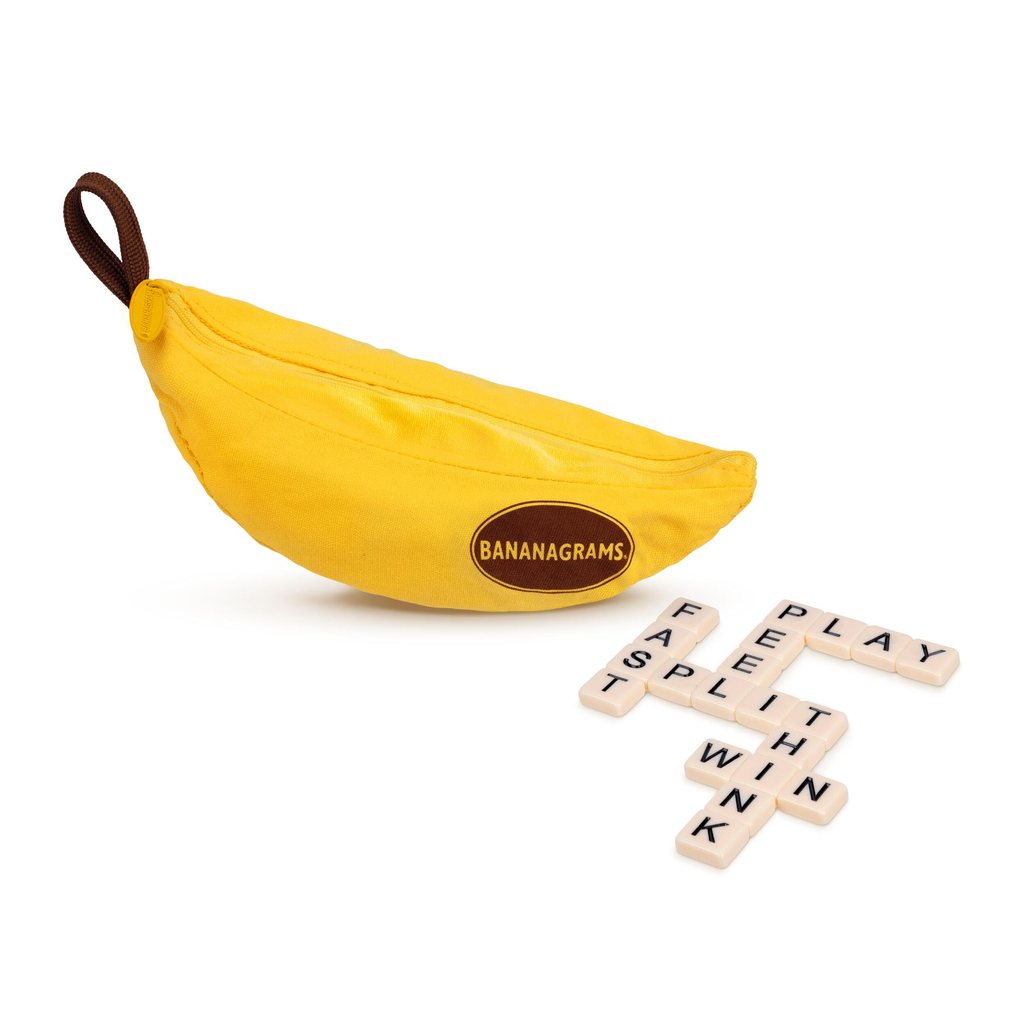
Scrabble without the board or the waiting. Everyone races to build their own crossword from letter tiles, all at the same time.
Buy Bananagrams · $11.99 → light weight
Qwirkle
$19.99, checked Nov 22.
Match colors and shapes to create rows and columns in a tile game.
Buy Qwirkle · $19.99 →Pick Bananagrams if
Your table loves words and speed: everyone builds their own crossword grid at once and races to use every tile.
Pick Qwirkle if
Your table prefers turns and no spelling, matching colours and shapes in shared lines.
Side by side.
| Fact | Bananagrams | Qwirkle |
|---|---|---|
| Players | 1-8 | 2-4 |
| Playing time | 15 min | 30-45 min |
| Weight | Light | Light |
| Price today | $11.99 | $19.99 |
- Both play at two.
- Solo: Bananagrams has a solo mode, Qwirkle does not.
- Biggest table: Bananagrams seats eight, Qwirkle stops at four.
- Cheaper today: Bananagrams by $8, prices checked Nov 22.
The tradeoff.
Bananagrams
Bananagrams is a word race. All 144 letter tiles go face down in the middle. Each player takes a starting handful and, at the same moment, begins building a personal crossword grid from them. When you have used every tile you shout peel, and every player must take one more. If you are stuck with an awkward letter you can dump it back and take three in exchange. The first player to use all their tiles once the pile is gone wins.
There are no turns and no scoring, which removes the two things that slow Scrabble down. You can tear your grid apart and rebuild it whenever you like, and you will need to when a Q arrives late. A round takes about ten minutes. The tiles live in a banana-shaped cloth pouch that fits in a bag, so it travels well and needs only a flat surface. Strong spellers will usually win, so with mixed ages it helps to give younger players a head start of a few tiles.
Best for: Family with Kids, Long Flight, 30 Minutes or Less
Qwirkle
Qwirkle distills tile-laying into its purest form. Players draw tiles bearing one of six colors and six shapes, then place them onto a shared grid to form lines, either matching colors with different shapes or matching shapes with different colors. On your turn, you add one or more tiles to existing rows or create new ones, scoring points for every tile in the completed line. The deck runs dry, players draw more tiles, and the game ends when nobody can or wants to play. It's genuinely that straightforward, which is precisely why it works so well as an introduction to strategic thinking.
What distinguishes Qwirkle from other light abstracts is its elegant tension between simplicity and decision-making. Each turn feels meaningful without requiring advanced planning, and the satisfaction of completing a line, especially a long one, resonates just enough to keep everyone engaged. The ruleset creates natural teaching moments; new players grasp the core concept within minutes, yet experienced players recognize the subtle positioning that separates cautious play from aggressive scoring. This sweet spot of accessibility and depth makes it genuinely fun rather than merely functional.
Best for: Board Games for Beginners
These are editorial picks; publishers cannot pay to appear here. Amazon links fund the site, and if you'd rather buy local, find a store via BoardGameGeek.