Head-to-head comparison
Power Grid: Recharged vs Brass: Birmingham
Both are heavy economic games for a full evening. Power Grid is easier to teach and plays six; Brass: Birmingham is richer and tops out at four.
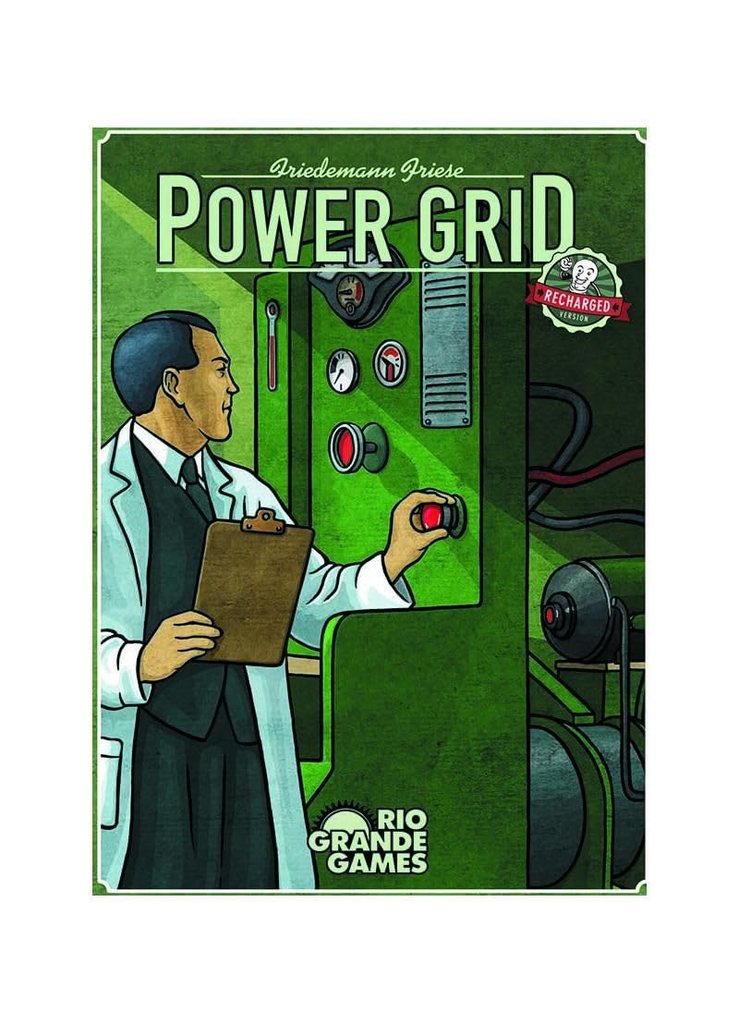 Heavy weight
Power Grid: Recharged
$45.13, checked Nov 22. Was $45.42 before Nov 22, down 1%. Lowest price we have recorded in 30 days. On the Black Friday drop list
Auction power plants, buy coal and uranium on a moving market, and wire up cities. A pure economics game where every dollar is counted twice.
Buy Power Grid: Recharged · $45.13 → heavy weight
Brass: Birmingham
$79.99, checked Nov 22. Was $76.79 before Nov 15, up 4%.
Build industries and trading networks in an intense economic strategy.
Buy Brass: Birmingham · $79.99 →Pick Power Grid: Recharged if
You want economics you can see: an auction, a fuel market with visible prices, and sums anyone can check.
Pick Brass: Birmingham if
You want a denser puzzle: canals and rails, loans, and industries that score for you when other players use them.
Side by side.
| Fact | Power Grid: Recharged | Brass: Birmingham |
|---|---|---|
| Players | 2-6 | 2-4 |
| Playing time | 90 min | 60-120 min |
| Weight | Heavy | Heavy |
| Price today | $45.13 | $79.99 |
- Both play at two.
- Biggest table: Power Grid: Recharged seats six, Brass: Birmingham stops at four.
- Cheaper today: Power Grid: Recharged by $34.86, prices checked Nov 22.
The tradeoff.
Power Grid: Recharged
Power Grid is an economic game about running an electric company. Each round has the same four steps. You bid against the table for power plants, buy the fuel those plants burn, pay to connect new cities on the map, and then collect income for every city you can actually power. The fuel market is shared, so when three players all burn coal the price of coal climbs for everyone.
Two things make it special. The first is the turn order: whoever is in the lead goes last when buying fuel and building, which keeps the game close until the final round. The second is that the whole thing is arithmetic you can see. No dice, no hidden cards, just a question of whether you can afford the plant and the connections in the same turn. That also means it rewards players who like doing sums, and it can run long with six. The Recharged edition is the current printing, with cleaned up rules and the same two maps, Germany and the United States.
Best for: Strategy Night, 5+ Players, 3-4 Players
Brass: Birmingham
Brass: Birmingham is a network-building economic strategy game where players develop industrial enterprises across 19th-century England. On your turn, you either play a card to build an industry, develop infrastructure, or sell goods for profit. Cards in your hand represent locations and resources, and playing them establishes factories, mines, and trading links. The clever twist: after playing a card, you discard your hand and draw new ones, forcing constant adaptation. The game spans two eras with different rules, and your network's value shifts dramatically between them. You're essentially constructing a supply chain while managing limited hand options and constantly shifting market conditions.
What separates Brass from other economic heavy-hitters is its elegant tension between long-term planning and forced improvisation. Every decision carries weight, building a steel mill creates future opportunities but locks you out of immediate pivots. The table experience feels genuinely tense; players watch each other develop competing networks with real stakes. The two-era structure means your carefully built empire undergoes seismic shifts halfway through, preventing anyone from running away with a dominant position. It's a game where clever timing and network positioning matter more than raw luck, rewarding players who can read opponents and anticipate disruptions.
These are editorial picks; publishers cannot pay to appear here. Amazon links fund the site, and if you'd rather buy local, find a store via BoardGameGeek.